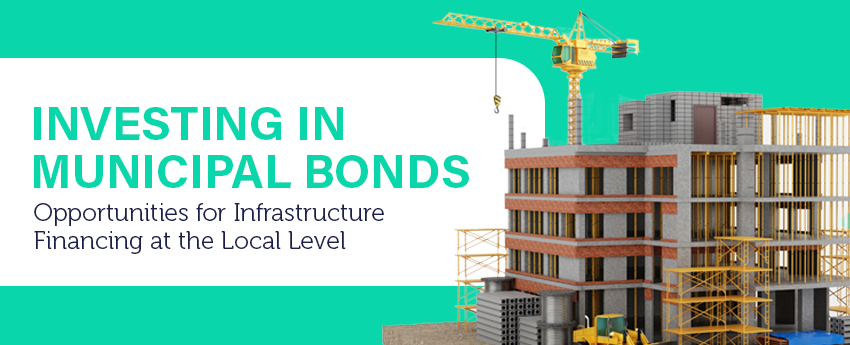
The growth in bond investments in India is most ably reflected through the varying sub-categories of bond products that are available in the market today. Indeed, choices pertaining to green bonds and bond IPOs were, in the context of investments in India, unheard of until recent years. Furthermore, the advent of municipal bonds has added another viable investment option to the larger mix of bond products.
In simple terms, municipal bonds, or muni-bonds, are issued in India by Urban Local Bodies (ULBs), municipal corporations, or authorised Special Purpose Vehicles (SPVs). These entities raise capital for public projects such as road construction, government buildings, water supply, schools, hospitals, and electrification. This structure allows investors to align their investments with the development of essential local infrastructure and community needs.
What is a Municipal Bond?
Municipal bonds allow local government entities to borrow funds for public projects. Everyday infrastructure, such as roads, water supplies, schools, hospitals, and other essential services people depend on in a city or town, is funded by the money raised through bond issuance.
Over time, investors get a fixed interest. To put it simply, investors receive regular income while their funds are utilised for public initiatives, and the government receives financing for development.
Types of Municipal Bonds
In India, municipal bonds can be broadly divided into the following two sub-categories:
General Obligation Bonds
As the term suggests, general obligation bonds concern projects which do not primarily intend to make profits but instead focus on fulfilling general obligations and the needs of the communities who reside in the concerned region. Since these obligations concern basic needs and can potentially influence public perception, governments harbour an incentive to successfully facilitate the said projects. Consequently, thus, investor perception and creditworthiness both rank high in the context of general obligation bonds.
Revenue Bonds
Through revenue bonds, government bodies raise debt capital with a view to fund projects that are aimed at generating revenue for the state. Projects concerning road constructions, where revenue is majorly generated by levying a toll on the concerned passengers, are primary examples pertaining to revenue bonds. While the profit motive concerning the concerned projects increase the likelihood of higher yields for investors investing in revenue bonds, the same factor also heightens one’s risk profile.
Who Should Consider Municipal Bonds?
Municipal bonds may suit investors who prefer steady income and less market movement in their investments. Here’s who may consider municipal bonds.
- Investors looking for regular income through fixed interest payments that may help support planned financial needs over time.
- Individuals who are at ease making investments in public development projects like hospitals, water supplies, and roads.
- Longer-term investors can hold their investments till maturity and do not require immediate access to their funds.
- Those who wish to diversify their investments in order to lower portfolio risk overall.
What are the Advantages of Municipal Bonds?
Municipal bonds may offer steady returns along with the benefit of supporting public projects. They are often known as a reliable component of a portfolio with fixed income.
- They may offer consistent interest payments, which can aid investors in better income planning.
- The funds raised go toward public initiatives that enhance regional services and infrastructure.
- Depending on the terms and regulations, certain municipal bonds could provide tax advantages.
- They add balance to a portfolio by reducing dependence on more volatile investments like stocks.
What are the Disadvantages of Municipal Bonds?
Municipal bonds are fairly stable, but they do have a few risks.
- Due to the restricted secondary market trade, selling them before they mature is not always simple. Finding a buyer might frequently take some time, and the selling price might be less than anticipated.
- These bonds are typically intended to be held for an extended length of time. They might not be appropriate for investors who require rapid access to their funds as a result.
- Returns are generally steady but not very high. They offer safety but may fall short compared to higher-return options in the market.
- There are also fewer options available. Investors may not always find bonds that match their preferred tenure or return expectations.
Risks of Municipal Bonds
Municipal bonds are relatively stable but still carry some risks that investors should be aware of.
- If the issuing authority faces financial issues, interest payments or repayment may be delayed.
- When market interest rates rise, older bonds may lose value in comparison.
- Selling the bond early may not always be easy and could lead to lower returns.
- Delays in public projects can sometimes affect the expected timeline of payments.
How to Invest in Municipal Bonds
Municipal bonds are available through regulated platforms, which make the investment process more structured and transparent for investors.
Step 1: Access Regulated Platforms
Municipal bonds are usually available through regulated debt investment platforms and authorised intermediaries. These platforms provide access to verified bond listings for investors.
Step 2: Review Available Options
Investors first go through the available options and compare different bonds carefully. They review details such as issuer name, tenure, and expected returns before making decisions.
Step 3: Check Issuer and Credit Ratings
Issuer data and credit ratings are examined to assess financial stability and repayment capacity. This helps investors understand the level of risk involved in the investment.
Step 4: Complete KYC Requirements
Investors complete the standard KYC requirements before proceeding with the investment process. This step ensures compliance and allows smooth access to platform features.
Step 5: Make the Investment Online
Investors can use the platform to make online investments in a simple and organised manner. The process is designed to be straightforward for ease of use.
Step 6: Understand Key Investment Factors
Understanding tenure, risk level, and liquidity is important before making the final investment decision. These factors influence how easily the investment can be managed or sold later.
What Sets Municipal Bonds Apart from Other Bond Offerings?
While the operative part of the bond investment in respect of municipal bonds remains the same, a number of specificities are manifest in the approach concerning municipal bonds. These disparate features can be briefly outlined in the following manner:
Transparency & Engagement
Since municipal bonds are issued with a view to fund local public projects, they allow their investors to keep a close watch on the specific set of projects concerning the bond investments. Unlike corporate bonds and a great many government bonds, thus, these bonds help the investors know the specific purpose concerning the accumulated debt capital. Furthermore, because these developments concerning public projects are also more easily discernible, an additional quotient of transparency is built into the design in the case of municipal bonds. Another consequence of such a feature is that local business acumen acts as a valid determinant at the time the investment decisions are made.
The Prevalence of Green Bonds
Green bonds, which refer to the accumulation of debt capital by corporations and governments to fund seemingly sustainable and climate-friendly endeavours, have become increasingly common in the past few years.
Recent data shows that municipal bonds in India are steadily gaining traction among urban local bodies. As of early 2026, around 64 municipal bond issuances have collectively raised over ₹8,300 crore, reflecting growing use of this route for infrastructure funding.
This trend highlights the increasing role of municipal bonds in supporting urban development and financing essential public projects across cities.
While the efficacy of the said projects in respect of reversing climate change may not be established, the response indicates that green municipal bonds as an investment option fare well among investors.
Tax Considerations
Saving taxes on income earned through investments greatly unburdens investors from an otherwise compulsory financial obligation. In the context of municipal bonds, since the debt capital is raised for projects that promote public interest, a number of them offer positive tax considerations. Thus, if all the necessary requirements concerning investment limits, holding periods, SEBI guidelines are thoroughly complied with, investors stand a chance to benefit from tax exemption on interest incomes derived from the said investments.
Holding Period
Before taking the plunge and deciding to invest in municipal bonds, investors must assess if their long-term needs allow them to hold their investments for longer periods. Indeed, it is generally known that the tenures of municipal bonds are relatively longer owing to the nature of projects that are funded through the accumulated capital. Thus, for investors to be able to choose municipal bonds, their strategies must leave room for engagements that pertain to longer investment horizons.
Liquidity
While investments in municipal bonds have undergone steady growth over the years, the amount of outstanding bonds is still relatively low in this sub-sector. It would follow, thus, that a reasonable secondary market is yet to be established with respect to municipal bonds. Therefore, the liquidity situation concerning municipal bonds is far from fluid and investor friendly. Investors must ponder relevant present realities before choosing the municipal bond route.
Conclusion
While municipal bonds investments can positively enhance one’s investment portfolio, investors must necessarily assess their own goals to explore the potency of such investments with respect to their own needs and demands. Investors should also assess issuer credit ratings from recognised agencies to understand repayment capacity and associated risk levels. Thus, before arriving at a conclusion, a thorough consideration of the above-mentioned factors can greatly help one in devising an informed view.
FAQs
1. What are municipal bonds in India?
Municipal bonds are issued by urban local bodies, municipal corporations, or authorised SPVs. They are used to raise funds for public projects such as roads, water supply, and hospitals.
2. Are municipal bonds a safe investment option?
Municipal bonds may be relatively stable compared to many market-linked investment options. Investors should still check issuer credit ratings and financial position before investing.
3. What kind of returns do municipal bonds offer?
Municipal bonds provide fixed interest payments to investors at regular intervals. Returns may be steady but may be lower than high-risk investment options.
4. Can municipal bonds be sold before maturity?
Municipal bonds can be sold before maturity through the secondary market. However, liquidity may be limited. So, selling at the expected price may be difficult.
5. Do municipal bonds offer tax benefits in India?
Some municipal bonds may provide tax benefits based on applicable rules and conditions. Investors should review eligibility and follow guidelines to claim such benefits.
Disclaimer:
The information contained in this Article (“Article”) is for general informational purposes only. Northern Arc Capital Limited (“Northern Arc”) does not make any warranties about the completeness, reliability, and accuracy of this information. Any action you take upon the information contained in this Article is strictly at your own risk, and Northern Arc will not be liable for any losses and damages in connection with the use of our Article.
The data included in this Article has been obtained from sources that are believed to be reliable and accurate at the time of publication. However, Northern Arc does not guarantee the accuracy or completeness of any information, nor does it assume any responsibility or liability for any errors or omissions therein. Any opinions expressed herein are subject to change without notice and Northern Arc is under no obligation to update or keep current the information contained in this Article.
This Article is not intended to constitute, and should not be construed as, investment advice or a recommendation to purchase, sell, or hold any security or to engage in any investment strategy or transaction. Readers should not rely solely on the information provided in this Article for making investment decisions and should conduct their own due diligence or seek the advice of a qualified professional.
The content of this Article is for informational purposes only and is not a solicitation or an offer to buy or sell any securities or financial instruments. Northern Arc is not responsible for any investment decisions made by the recipients of this Article. Readers should take independent financial advice from a qualified professional in connection with, or independently research and verify, any information that is provided in this Article and wish to rely upon, whether for the purpose of making an investment decision or otherwise.
Northern Arc and its affiliates, directors, employees, and agents expressly disclaim any and all liability for any direct or indirect losses, damages, or expenses of any kind arising out of or relating to the use of this Article, including but not limited to, any losses related to the accuracy, completeness, timeliness, or reliability of such information.
This Article may contain forward-looking statements that are based on current expectations, estimates, forecasts, and projections about the markets in which Northern Arc operates, as well as management’s beliefs and assumptions. Forward-looking statements are not guarantees of future performance and involve certain risks and uncertainties, which are difficult to predict. Past performance is not indicative of future results.
This report is intended solely for the recipient and is not for further circulation. Any distribution, modification, reproduction, or disclosure of the contents of this Article, in whole or in part, without the prior written consent of Northern Arc, is strictly prohibited.