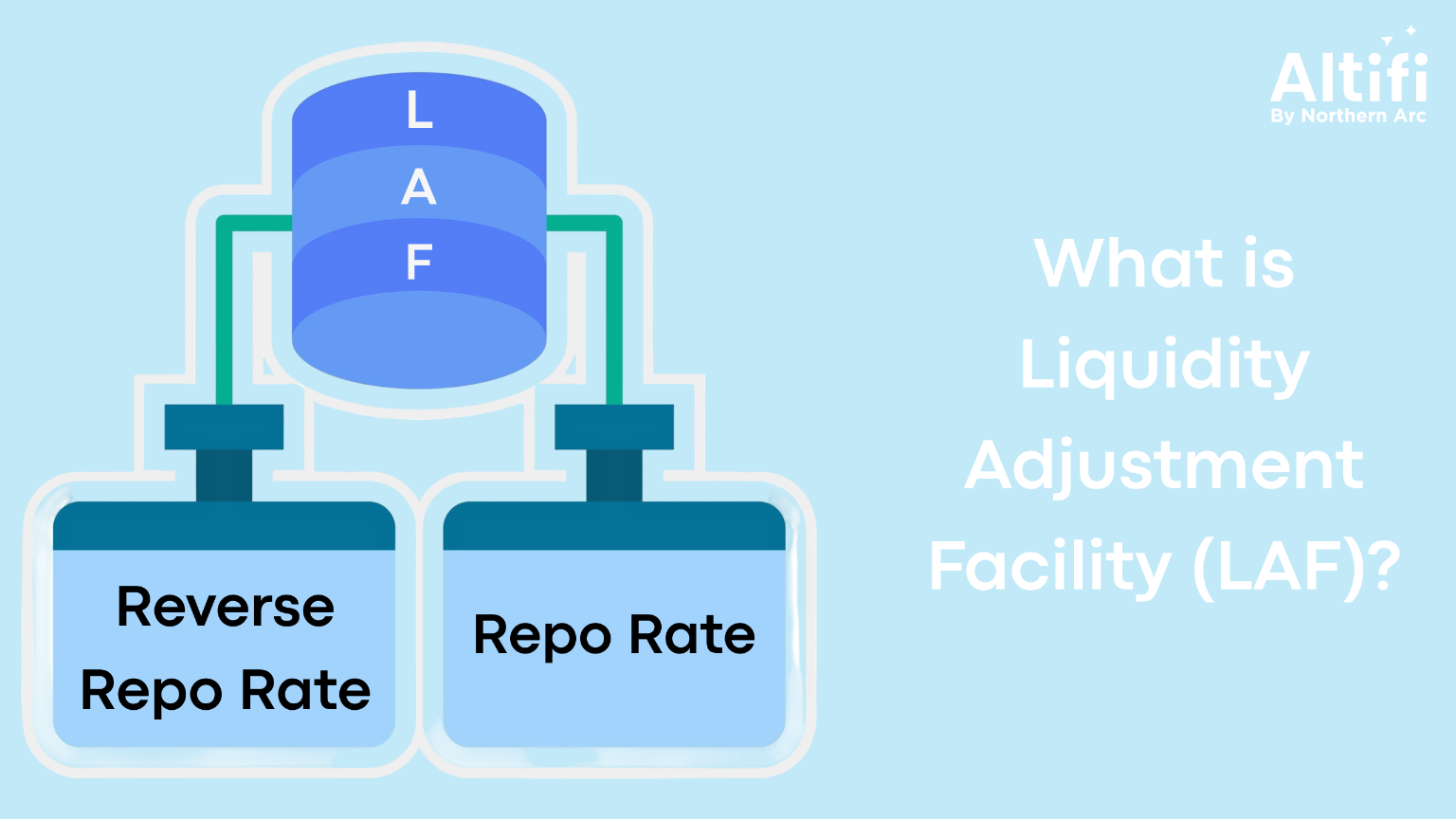
The Liquidity Adjustment Facility is a primary tool used by the Reserve Bank of India (RBI) to manage the money supply within the economy. These measures help the banks to understand how to handle short-term cash mismatches by looking at the repo and reverse repo rates in addition to the sensitivity of the banking system to the movements in the market. LAF is the mechanism of adjusting liquidity over the benchmark, which reflects the performance of the central bank’s monetary policy, and it ensures that interest rates remain stable. All these measures can provide more information to investors regarding the risk-return profile of the economy and help them make more significant investment choices.
Introduction to Liquidity Adjustment Facility
The Liquidity Adjustment Facility (LAF) is an indication of how the banking system is managing its daily cash requirements in comparison to their needs. A balanced LAF implies that the market has sufficient funds to operate without causing high inflation and vice versa. LAF is commonly applied to gauge the effectiveness of the Reserve Bank of India in controlling the flow of money and maintaining financial stability across the industry.
Liquidity Adjustment Facility Meaning
Liquidity adjustment facility RBI is a monetary policy instrument that allows commercial banks to borrow money through repurchase agreements. It serves as a window for banks to manage day-to-day fluctuations in liquidity and ensure they have enough capital to meet their operational demands. By adjusting the cost of these funds, the RBI can influence the overall credit availability in the market and maintain a stability within the financial sector.
Example of Liquidity Adjustment Facility
Suppose a large bank needs ₹450 crore to balance its books at the end of the day due to unexpected withdrawals. The bank can use the LAF window to borrow this amount from the RBI by pledging its government bonds at the current repo rate of, say, 6.25%. Once the bank's cash flow improves the next day, it repays the loan plus interest and gets its bonds back. This ensures the bank continues to operate without any disruption to its customers.
How the Liquidity Adjustment Facility Works
The LAF operates through specific interest rate signals that affect how money moves between the central bank and commercial lenders.
Repo Rate in LAF
The repo rate is the interest rate at which the RBI lends money to commercial banks for short periods. When banks face a shortage of funds, they sell government securities to the RBI with an agreement to buy them back later. A higher repo rate makes borrowing expensive, which usually leads to a rise in interest rates for the general public.
Reverse Repo Rate in LAF
The reverse repo rate is the interest at which RBI seeks loans from banks. It is a measure of how much banks are willing to keep their excess funds at the central bank in exchange for interest. A higher reverse repo rate often lead to banks holding their funds with RBI, rather than lending them out into the system.
Role of the Reserve Bank of India
The RBI acts as the primary regulator that monitors the liquidity levels daily. By changing these rates, the RBI sends signals to the entire financial system regarding inflation and economic growth. This helps to keep the banking system stable and ensures that the liquidity matches the plan for the broader economy.
Components of the Liquidity Adjustment Facility
The table below shows the difference between the primary components of the LAF framework.
Basis | Repo Rate | Reverse Repo Rate |
Meaning | The rate at which RBI lends money to commercial banks. | The rate at which RBI borrows money from commercial banks. |
Purpose | Used to enhance liquidity in the banking system. | Used to absorb excess liquidity from the banking system. |
Focus Area | Focuses on controlling inflation by making borrowing costlier. | Focuses on managing surplus cash to prevent monetary stability. |
Investor Insight | Helps investors predict a rise in loan EMIs and deposit rates. | Helps investors understand when banks have excess idle cash. |
Practical Use | Used by RBI to tighten the money supply during high inflation. | Used by RBI to reduce liquidity and stabilise the currency. |
Repo Operations
Repo operations are the most common transactions where the RBI provides immediate liquidity to banks. This is a very important mechanism that allows banks to access cash by pledging their government bond holdings, ensuring they can meet their short-term obligations without delay.
Reverse Repo Operations
Reverse repo operations are used when there is a surplus of money in the banking system. By offering a safe way for banks to earn interest on idle cash, the RBI can effectively reduce the amount of money circulating in the economy, which helps in maintaining the value of the currency.
Standing Deposit Facility (SDF)
The SDF is a tool that allows the RBI to absorb liquidity without the need for government securities as collateral. It offers a new and useful way to manage large amounts of excess cash in the system, especially when capital inflows are very high, making the process of liquidity management more flexible.
Marginal Standing Facility (MSF)
The MSF is a window for banks to borrow overnight funds in emergency situations when inter-bank liquidity dries up. The interest rate for MSF is usually higher than the repo rate, acting as a safety valve for the banking system during volatile periods to ensure financial stability.
Impact of Liquidity Adjustment Facility on the Economy
LAF operations are important indicators which assist the market to analyse the cost of money and risk systematically.
Impact on Interest Rates
When the RBI changes the repo rate, commercial banks usually adjust their lending and deposit rates. This can be used to make better and balanced financial choices, as it directly impacts the interest paid on home loans and returns earned on savings accounts.
Impact on Inflation
To control rising prices, the RBI may increase the repo rate. This reduces the money supply because borrowing becomes costly, leading to lower spending. These metrics enable the regulator to evaluate how efficiently price stability is obtained in relation to economic growth.
Impact on Liquidity in the Banking System
The LAF ensures that banks have access to funds at any given time to meet their demand for daily withdrawal requests from the customers. This is a measure of the quality of liquidity management that prevents shortage that may affect the ecosystem and prepares the system for the future.
Why the Liquidity Adjustment Facility Matters for Investors
Investors use LAF trends to identify the direction of the market and align their portfolios with the prevailing interest rate environment.
Effect on Bond Yields
Bond yields are sensitive to the rates set within the LAF framework. When the RBI raises the repo rate, bond yields tend to rise, which causes the prices of existing bonds to fall. This is a major shift that debt investors must monitor closely to protect their capital.
Effect on Fixed Income Investments
For those who rely on fixed deposits, the LAF determines the returns they earn. Simultaneously, investors use these rates to identify whether the returns on their debt instruments correspond to their desired level of income and risk tolerance, helping them build a complete solution for their wealth.
Conclusion
The Liquidity Adjustment Facility is an essential tool that helps obtain an in-depth insight into the movement of money in addition to interest rate trends. LAF shows us how the RBI is able to manage surplus or deficit funds, hence the quality of monetary management. Collectively, these measures can enable investors to consider whether the current economic environment is providing sufficient returns to justify the amount of risk undertaken in the markets. The analysis of repo and reverse repo rates allows investors to make better decisions when investing their money. These measures can be utilised to select the best type of fixed-income assets and help build a well-designed investment portfolio for long-term financial objectives.
FAQs
How does the Liquidity Adjustment Facility impact interest rates?
A change in the LAF rates, especially the repo rate, usually leads to a corresponding change in the interest rates offered by banks on loans and deposits, as borrowing costs for banks rise or fall.
What role does the liquidity adjustment facility play in controlling inflation?
By raising the repo rate through the LAF, the RBI makes borrowing expensive. This reduces the total spending in the economy, which helps in slowing down the rate of price increases and maintaining stability.
How are the repo rate and reverse repo rate determined in the LAF framework?
The rates are determined by the Monetary Policy Committee (MPC) of the RBI during their periodic meetings, based on economic factors like the inflation target and the current state of economic growth.
What is the difference between LAF and MSF?
Neither LAF nor MSF is superior to the other because they have different applications. LAF is for regular liquidity management, whereas MSF is for emergency overnight borrowing at a higher rate when inter-bank liquidity is unavailable.
What is the difference between LAF and SDF?
LAF repo operations require collateral in the form of government securities, while the Standing Deposit Facility (SDF) allows the RBI to absorb liquidity from banks without providing any collateral in return.
Why is the liquidity adjustment facility important for the banking system?
It is very important because it provides a reliable mechanism for banks to manage their daily cash flow, ensuring that they remain solvent and can always meet the withdrawal demands of their customers.
Disclaimer
The information contained in this newsletter (“Newsletter”) is for general informational purposes only. Northern Arc Capital Limited (“Northern Arc”) does not make any warranties about the completeness, reliability, and accuracy of this information. Any action you take upon the information contained in this Newsletter is strictly at your own risk, and Northern Arc will not be liable for any losses and damages in connection with the use of our Newsletter.
The data included in this Newsletter has been obtained from sources that are believed to be reliable and accurate at the time of publication. However, Northern Arc does not guarantee the accuracy or completeness of any information, nor does it assume any responsibility or liability for any errors or omissions therein. Any opinions expressed herein are subject to change without notice and Northern Arc is under no obligation to update or keep current the information contained in this Newsletter.
This Newsletter is not intended to constitute, and should not be construed as, investment advice or a recommendation to purchase, sell, or hold any security or to engage in any investment strategy or transaction. Readers should not rely solely on the information provided in this Newsletter for making investment decisions and should conduct their own due diligence or seek the advice of a qualified professional.
The content of this Newsletter is for informational purposes only and is not a solicitation or an offer to buy or sell any securities or financial instruments. Northern Arc is not responsible for any investment decisions made by the recipients of this Newsletter. Readers should take independent financial advice from a qualified professional in connection with, or independently research and verify, any information that is provided in this Newsletter and wish to rely upon, whether for the purpose of making an investment decision or otherwise.
Northern Arc and its affiliates, directors, employees, and agents expressly disclaim any and all liability for any direct or indirect losses, damages, or expenses of any kind arising out of or relating to the use of this Newsletter, including but not limited to, any losses related to the accuracy, completeness, timeliness, or reliability of such information.
This Newsletter may contain forward-looking statements that are based on current expectations, estimates, forecasts, and projections about the markets in which Northern Arc operates, as well as management’s beliefs and assumptions. Forward-looking statements are not guarantees of future performance and involve certain risks and uncertainties, which are difficult to predict. Past performance is not indicative of future results.
This report is intended solely for the recipient and is not for further circulation. Any distribution, modification, reproduction, or disclosure of the contents of this Newsletter, in whole or in part, without the prior written consent of Northern Arc, is strictly prohibited.